Traffic Reflective Film
Why Prismatic Structure Matters — Part 1: Understanding Micro-Prismatic Reflective Sheeting Grades
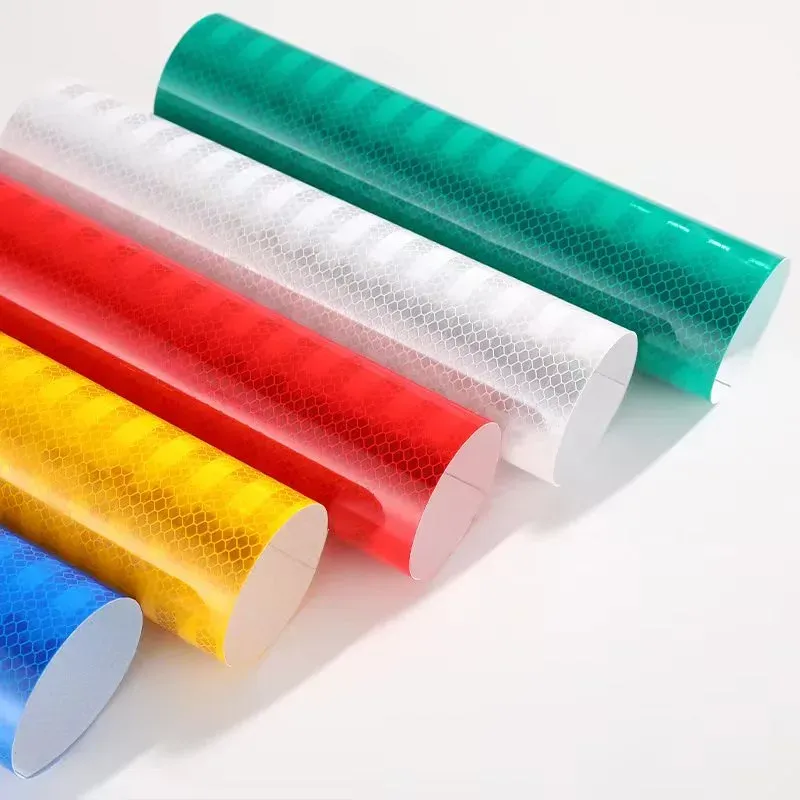
When purchasing reflective sheeting for traffic signs, road safety devices, industrial signs, or public facility signage, one of the most common questions is:
Why can two reflective films both be called "micro-prismatic reflective sheeting" but perform very differently at night?
The answer lies not only in the material itself, but also in the optical structure, retroreflective efficiency, viewing geometry, durability, adhesive system, and intended application.
Understanding these differences is important for professional buyers because choosing a higher grade does not automatically mean choosing the most suitable product.
The correct reflective sheeting should always be selected according to the actual application.
What Is Micro-Prismatic Reflective Sheeting?
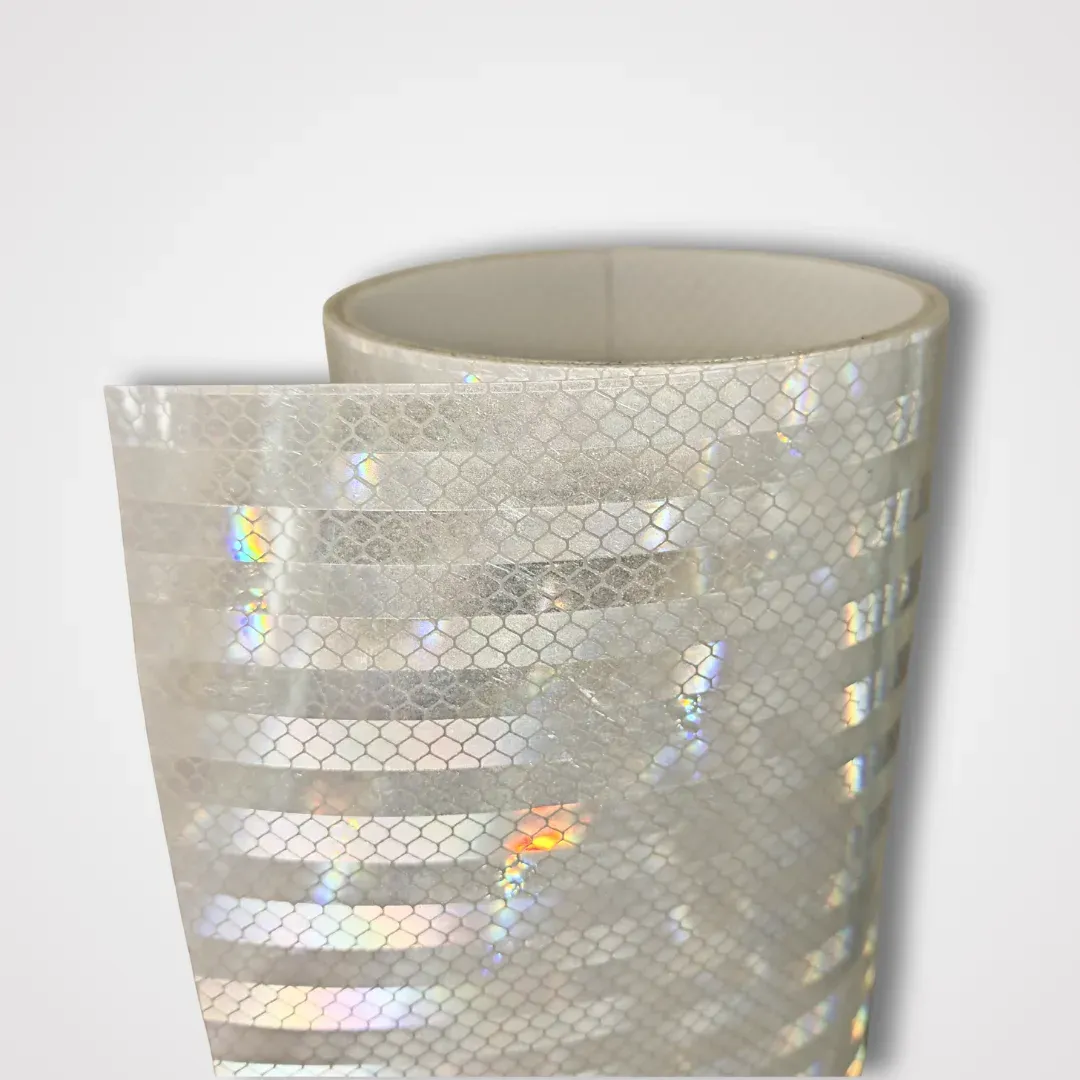
Micro-prismatic reflective sheeting contains a large number of microscopic optical prisms, generally based on cube-corner structures.
When vehicle headlights strike the surface, these microscopic structures redirect a significant portion of the incoming light back toward the light source.
This phenomenon is called retroreflection.
Unlike ordinary reflective surfaces, which scatter light in many directions, retroreflective materials are designed to return light approximately toward its source.
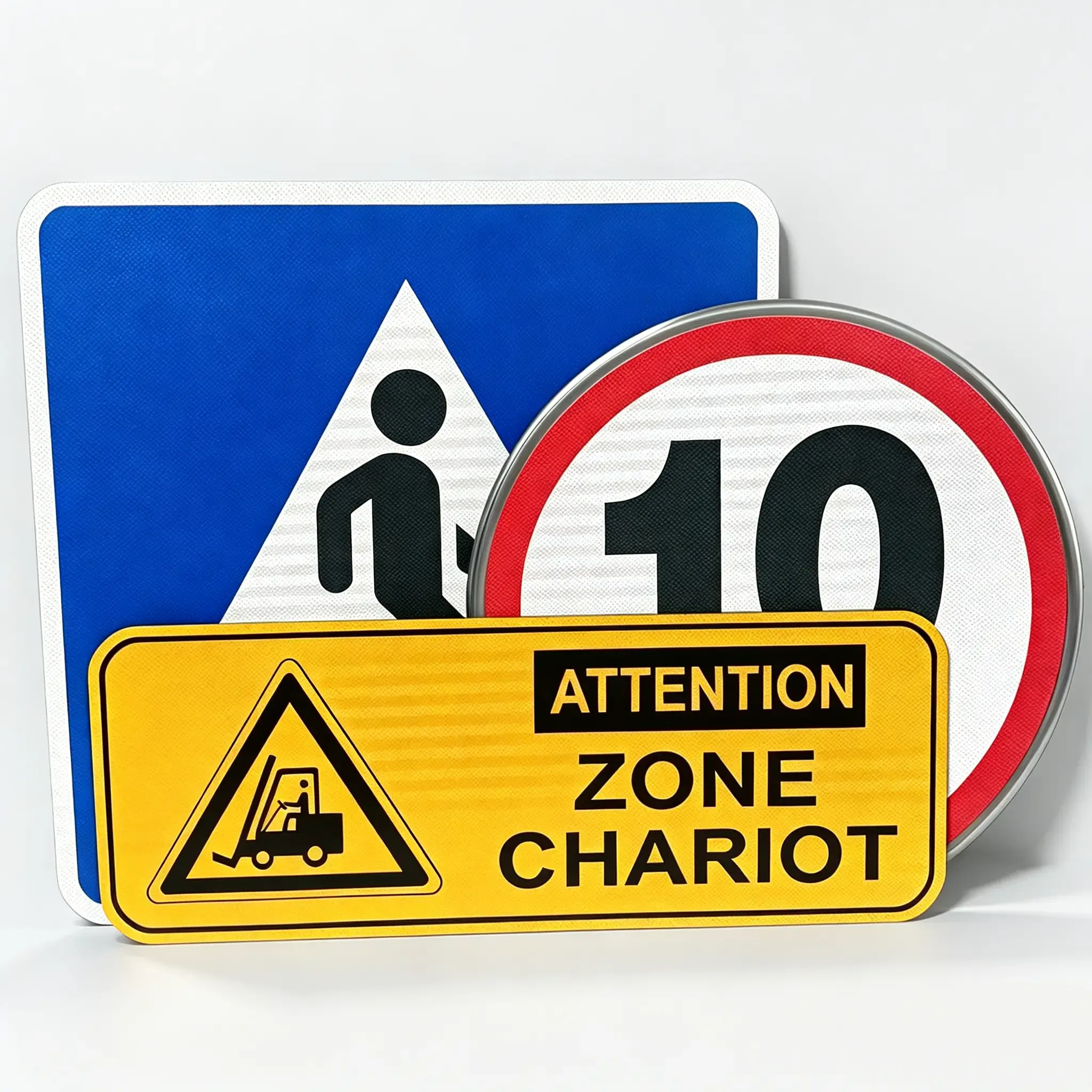
For road traffic applications, this means that light from a vehicle's headlights can be returned toward the driver, helping traffic signs remain visible at night.
The effectiveness of this process depends heavily on the design and efficiency of the micro-prismatic optical structure.
Why Does the Prismatic Structure Matter?
Not all prism structures are equally efficient.
The geometry, size, orientation, arrangement, and manufacturing accuracy of the microscopic prisms influence how much light can be returned toward the driver.
More advanced micro-prismatic structures can generally achieve higher retroreflective performance and better visibility under demanding viewing conditions.
However, maximum brightness is not the only purchasing criterion.
A sign installed beside a low-speed urban road has very different optical requirements from an overhead highway sign viewed from a long distance.
This is why professional buyers should evaluate the complete application rather than simply asking:
"Which reflective film is the brightest?"
Understanding the Main Performance Levels
The reflective sheeting industry often uses terms such as Engineer Grade, High Intensity Prismatic, High Performance Prismatic, Type IV, Type IX, and Type XI.
These terms should not be treated as completely interchangeable.
Some are performance classifications defined by standards, while others may be manufacturer-specific product descriptions.
For international procurement, referring to an applicable standard such as ASTM D4956 is usually more precise than relying only on a marketing grade name.
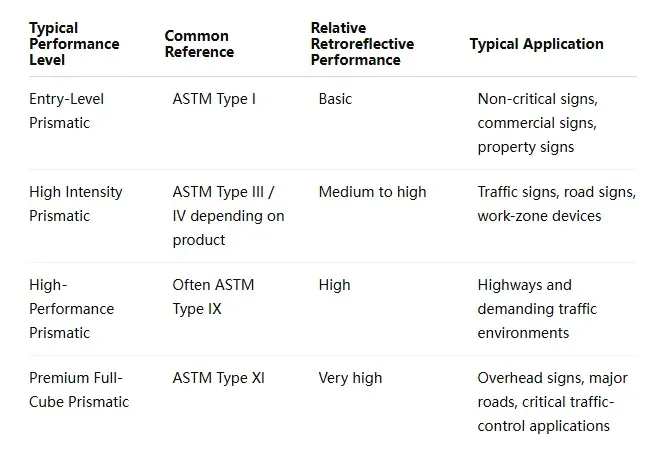
The exact specification should always be confirmed using the manufacturer's technical data sheet and the requirements of the relevant road authority.
1. Entry-Level Prismatic Reflective Sheeting
Entry-level prismatic reflective sheeting is generally intended for applications where extremely high nighttime visibility is not required.
Some products in this category can meet ASTM D4956 Type I requirements.
Typical applications may include commercial signs, warehouse identification, property signs, parking-related signs and certain low-demand traffic-control applications where permitted by local regulations.
The main advantage is usually a balance between cost and basic reflective performance.
However, it should not automatically be selected for high-speed roads or critical regulatory signage.
2. High Intensity Prismatic Reflective Sheeting
High Intensity Prismatic, commonly abbreviated as HIP, represents a significant improvement in optical performance compared with basic reflective grades.
Certain HIP products meet ASTM D4956 Type IV requirements and are widely used for traffic and road signs.
Compared with entry-level materials, HIP sheeting generally provides stronger nighttime visibility and better performance across more demanding traffic environments.
Typical applications include regulatory signs, warning signs, directional signs, construction-zone devices, road delineators and many municipal road-safety installations.
For many conventional road-sign projects, HIP provides a practical balance between performance and cost.
3. High-Performance Prismatic Reflective Sheeting
As traffic speeds increase and sign viewing distances become longer, the optical requirements become more demanding.
High-performance prismatic films are designed to deliver stronger luminance and improved visibility under these conditions.
Products meeting performance levels such as ASTM Type IX are often selected for demanding highway or traffic-sign applications where greater nighttime conspicuity is required.
The improvement is not simply a matter of making the surface "brighter."
The optical system must return useful light toward drivers across the required combinations of entrance angles and observation angles.
This becomes particularly important for signs installed high above the roadway, far from the vehicle path, or at unusual roadside positions.
4. Type XI / Full-Cube High-Performance Reflective Sheeting
ASTM Type XI represents one of the highest commonly specified performance categories for micro-prismatic traffic-sign sheeting.
Advanced full-cube prismatic designs can return considerably more useful light toward drivers than conventional High Intensity Prismatic materials.
This type of material is commonly considered for applications such as major highways, overhead signs, critical regulatory signs, complex intersections and other situations where strong nighttime visibility is particularly important.
Nevertheless, procurement specifications should still be based on the required standard and project conditions rather than simply specifying "the highest grade."
What Comes Next?
Knowing the grade is only the first step.
Two reflective sheetings that appear similar on paper may behave very differently depending on entrance angle, observation angle, outdoor durability, printing compatibility, and adhesive performance.
In Part 2, we will explain the key technical parameters professional buyers should check before placing an order.
Anshi — Reflective Materials & Traffic Safety Solutions