Anti-Counterfeit Labels
Automotive Windshield Security Labels: From Simple Sticker to Multi-Layer Vehicle Identification System
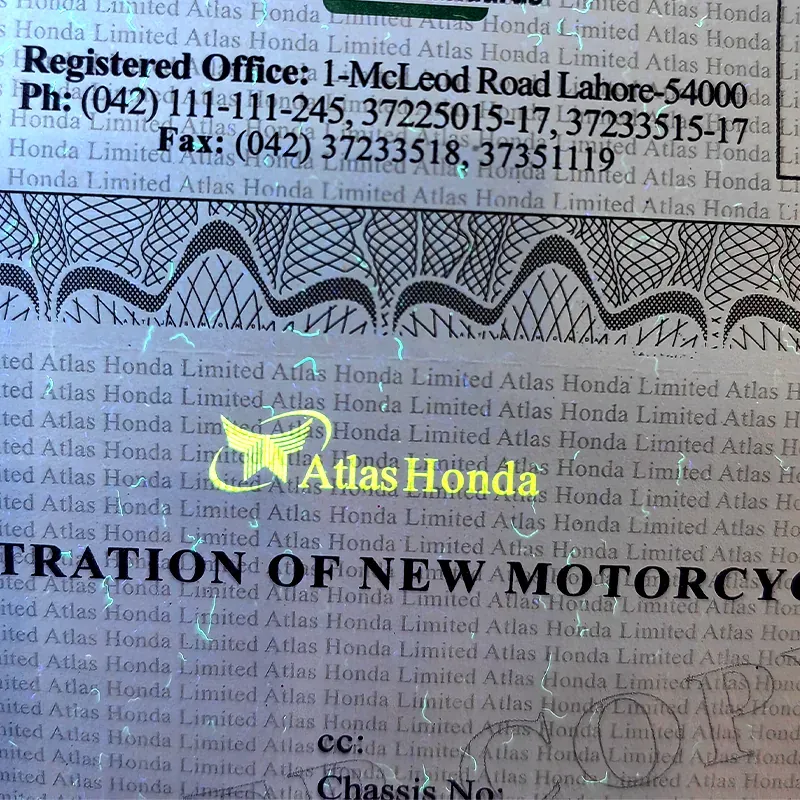
Printed Vehicle Information
Depending on the project, visible data may include:
- Registration number
- Inspection information
- VIN-related data
- Vehicle class
- Validity date
- Authority name
- Serial number
Some information may be fixed while other information is generated individually for every label. This requires reliable variable-data management.
Barcode and QR Code
Machine-readable codes can provide another identification layer.
They may link to:
- Vehicle records
- Registration databases
- Inspection systems
- Internal asset-management systems
Variable data must be controlled carefully so that the printed information corresponds with the database record.
RFID Integration
RFID can allow contactless electronic identification.
For windshield applications, antenna design and placement become especially important because vehicle glass structures and surrounding materials can influence RF performance.
Projects should therefore confirm:
- Frequency
- Reader type
- Reading distance
- Installation position
- Windshield construction
- Encoding format
Holographic Security
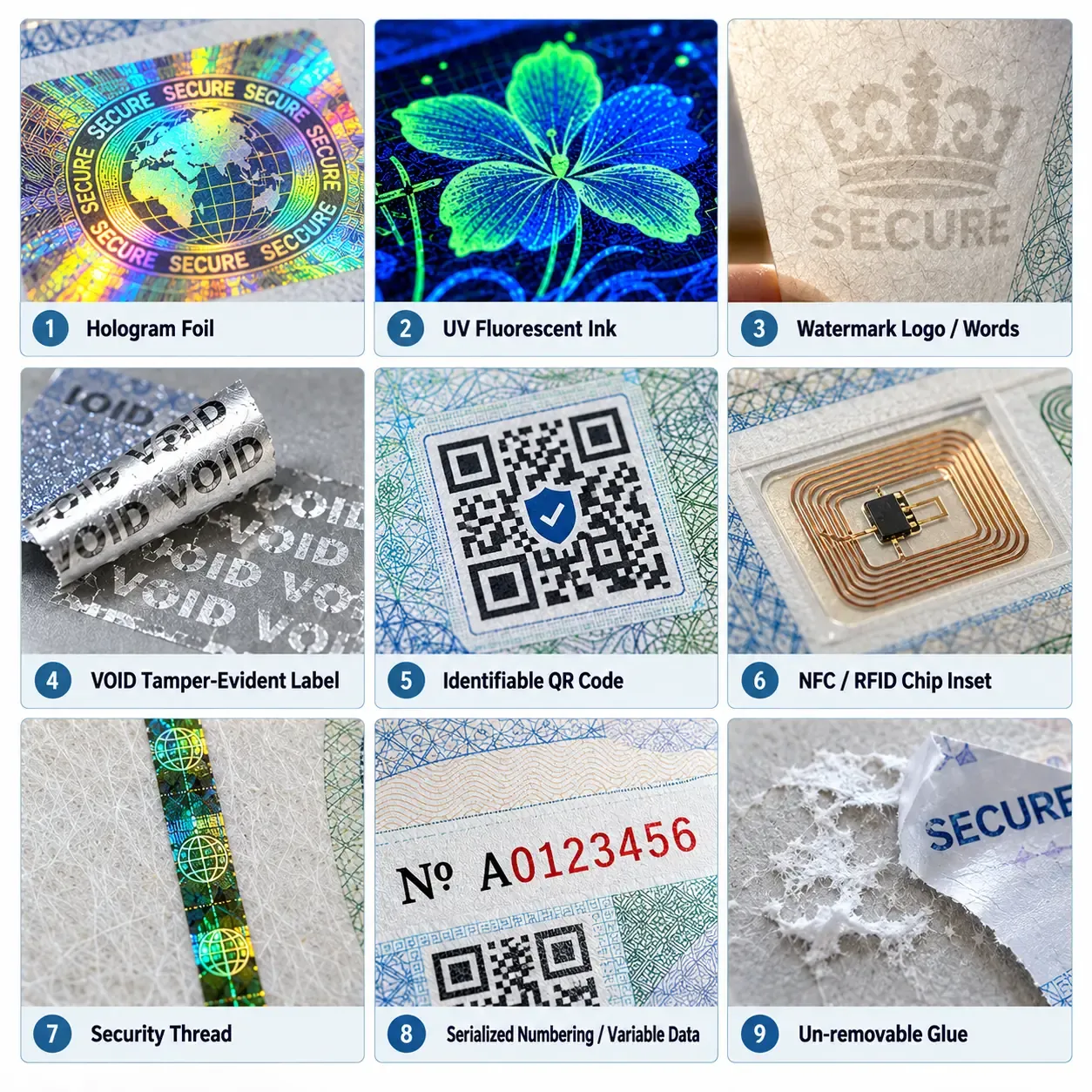
Customized holographic structures can provide an overt authentication feature.
Possible elements include:
- Customized logo
- Optical patterns
- Microtext
- Multi-angle effects
- Hidden images
- Diffractive structures
The objective is not simply decoration. The hologram becomes one component of the authentication system.
UV Fluorescent Features
UV security printing provides a covert verification layer.
A marking may remain difficult to see under ordinary illumination but become visible under a specified UV light source.
Different projects may specify different fluorescent colors, patterns or positions.
Tamper-Evident Construction
For vehicle registration and inspection applications, controlling unauthorized transfer may be important.
Depending on requirements, the label can use:
- Destructible materials
- Security cuts
- VOID structures
- Delaminating constructions
- Special adhesive systems
The objective is to make unauthorized removal or reuse detectable.
Multi-Layer Security
The strongest vehicle identification labels normally do not depend on one feature.
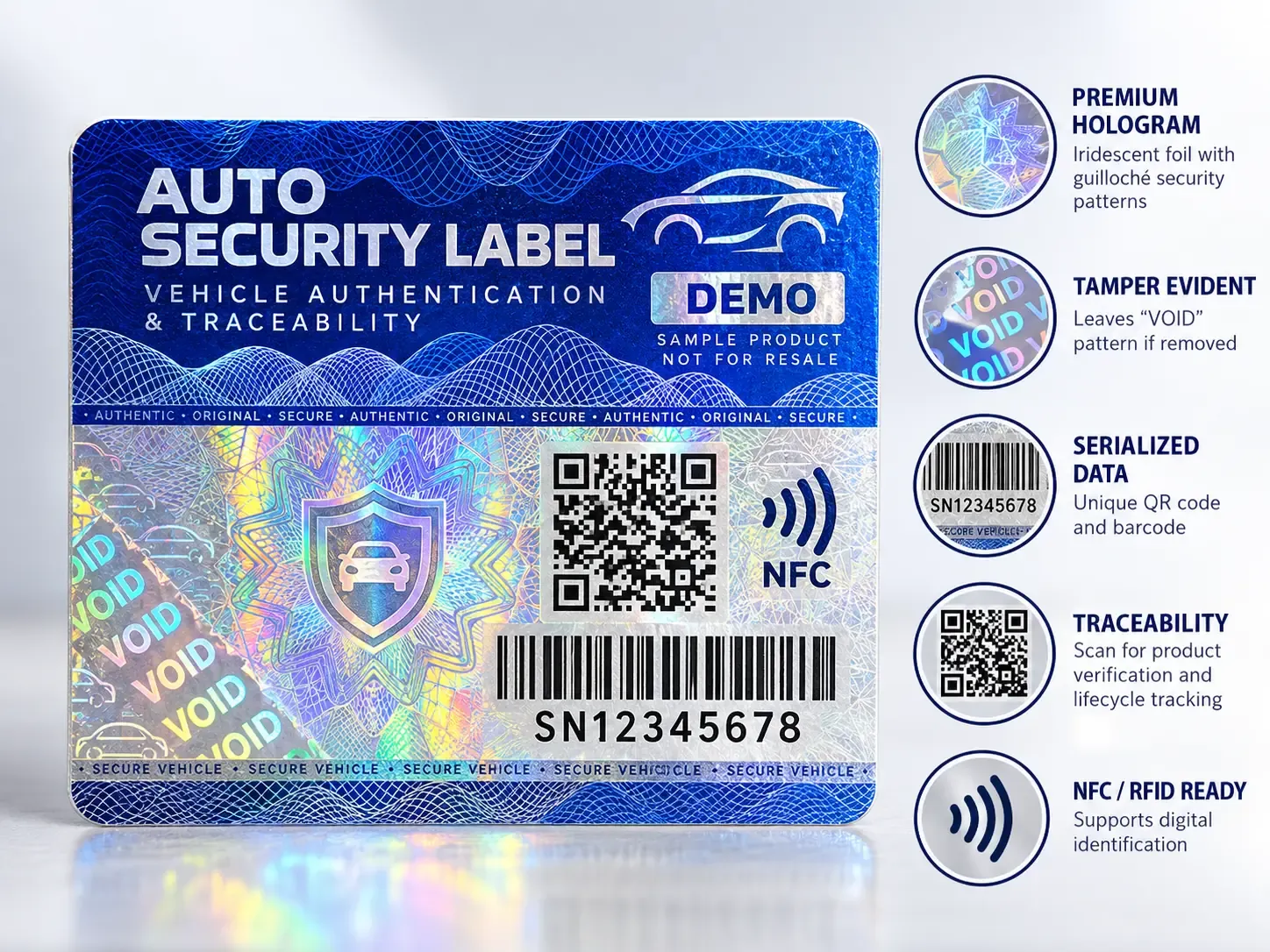
A possible structure might combine:
Visible layer: customized hologram
Covert layer: UV fluorescent pattern
Machine-readable layer: QR / barcode / RFID
Unique identity layer: serial number
Physical security layer: tamper-evident construction
Each project should be designed according to the required security level.
Custom Development
At Anshi, projects of this type are approached as customized identification products rather than standard labels.
Development can involve:
- Material selection
- Adhesive selection
- RFID configuration
- Holographic design
- UV printing
- Variable data
- Serialization
- Die cutting
- Security structure
- Sample testing
For vehicle-label projects, drawings, technical specifications or existing samples can be evaluated before determining the final production structure.